The transition from primary clinical care to a stepdown halfway house is the most vulnerable phase of a patient's recovery. Discover why a single, unified point of management is critical for reducing relapse, ensuring data continuity, and streamlining facility operations.
Learn Why It Matters ↓Traditional rehabilitation relies on disconnected systems. Medical records stay at the primary clinic, while the halfway house manages daily routines on paper or separate apps. This disconnect creates dangerous blind spots.
When a unified Electronic Health Record (EHR) bridges inpatient care and stepdown housing, treating teams have a complete history at every transition point. Clinical notes, medication protocols, and risk assessments follow the patient, ensuring no critical data is lost in the handoff.
Addiction recovery requires collaboration between psychiatrists, therapists, house managers, and sponsors. A single platform eliminates communication gaps, preventing patients from falling through the cracks or receiving contradictory care directives across different levels of care.
Staff spend less time chasing lost paperwork, duplicating data entry, or reconciling billing across separate systems. By streamlining compliance workflows (like 42 CFR Part 2) and automated ledgers, facilities can reallocate time from administrative overhead directly back into patient care.
Explore the dedicated platforms that make up the SOBR Ecosystem. Each is tailored to the specific needs of its phase in the recovery journey, while feeding into a single, unified database.
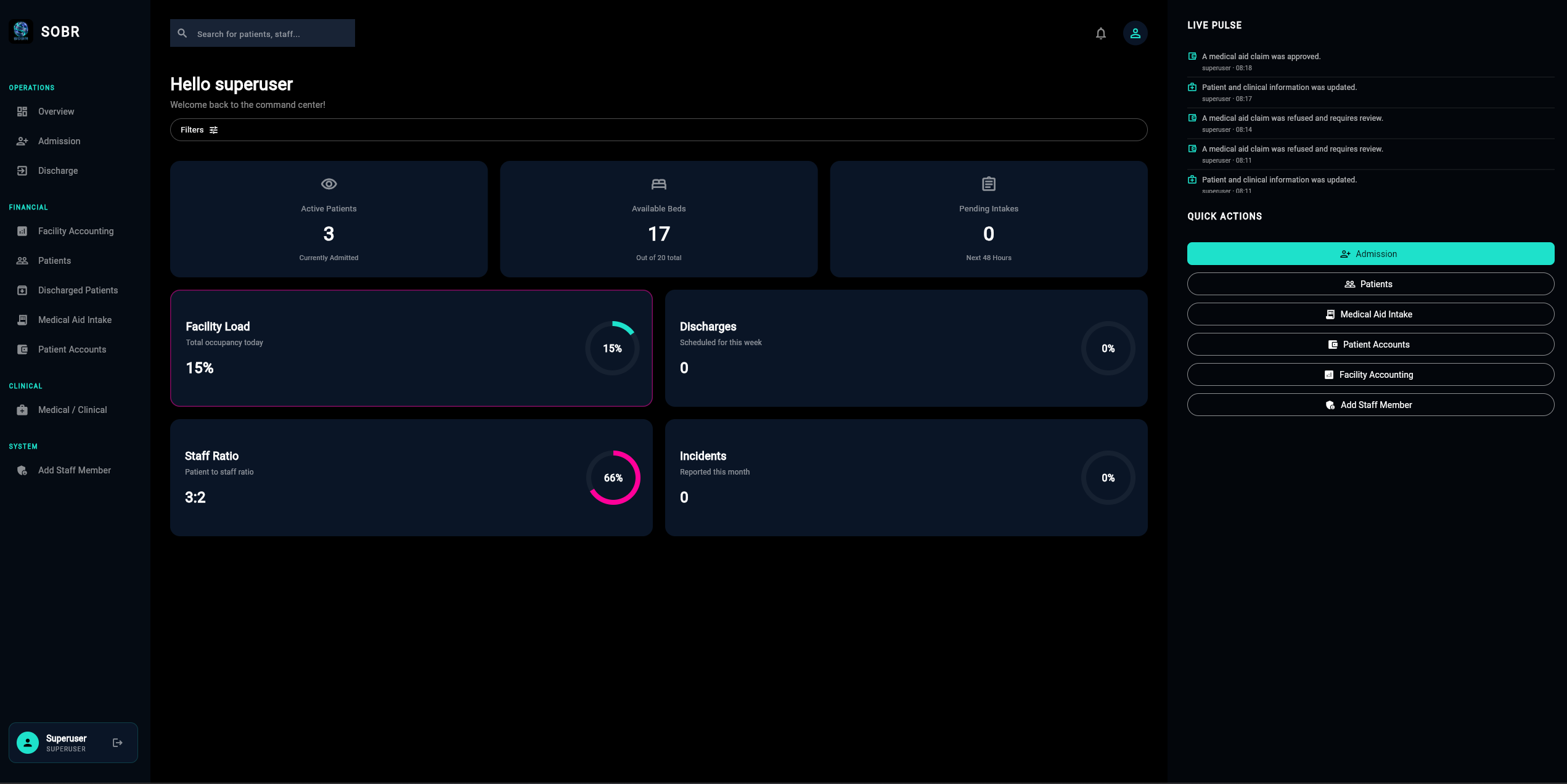
Built for Primary Care & Inpatient Rehab. Manage ICD-10 diagnoses, medical aid intakes, one-on-one therapy formulations, doctor's prescriptions, and high-level facility accounting.
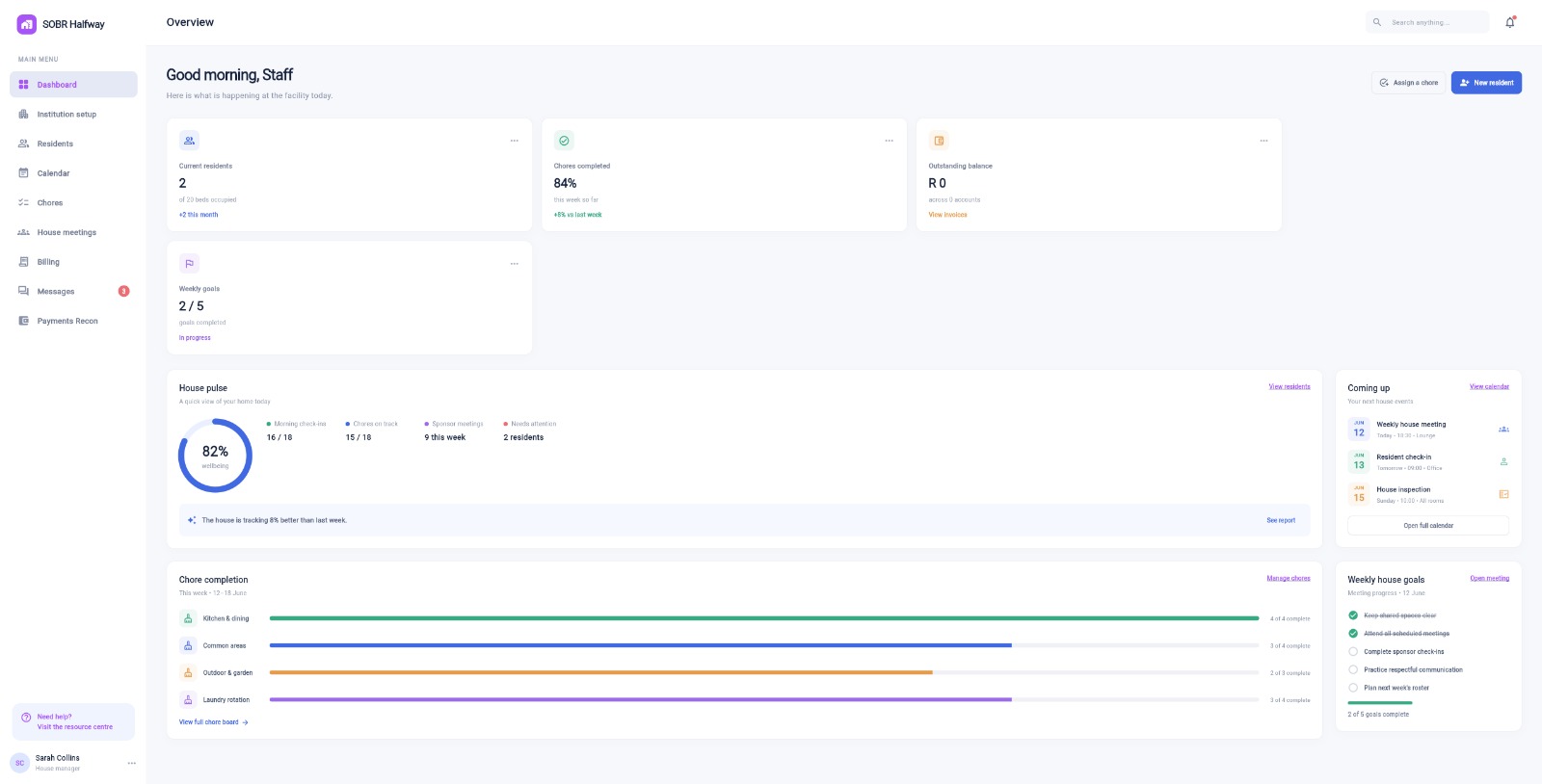
Built for Halfway Houses & Sober Living. Manage resident chores, 5-pillar accountability meetings, live geolocated check-ins, rent ledgers, and the integrated resident mobile app.